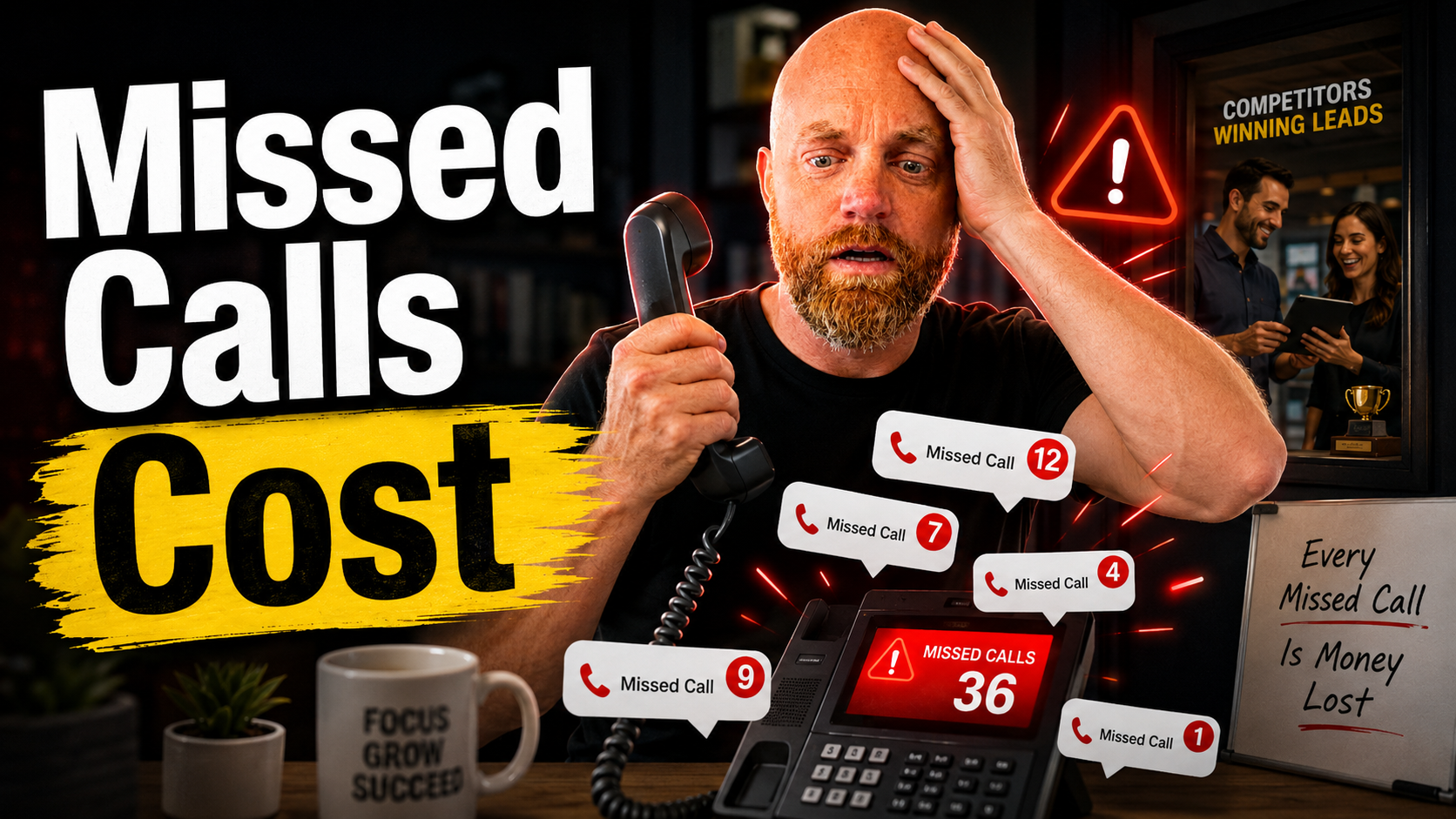
What Missed Calls Actually Cost a Contractor
Two missed calls a day does not sound dramatic.
That is the problem.
It looks like a phone notification. It feels like something you can handle later. But for a contractor, a missed call is often a customer who needed help today and called the next business that picked up.
That job never shows up in the pipeline, so it never shows up as lost revenue.
Where the Call Goes
Most people do not leave voicemails anymore.
They search, tap call, wait a few rings, and move to the next result. Especially if the problem is urgent. Leaking pipe, broken AC, no heat, locked out, cracked windshield. They are not building a vendor spreadsheet. They are trying to get someone to answer.
That means the window is small.
You can be the better contractor and still lose because someone else picked up first.
Run the Math
Use your own numbers.
Average job value. Missed calls per day. Working days per year. Close rate from captured calls.
Even conservative math gets uncomfortable fast.
If you miss two calls a day, five days a week, that is 500 missed calls a year. If only 10% of those would have turned into $750 jobs, that is $37,500 you never got a chance to quote.
If the numbers are higher, the leak is higher.
The exact figure matters less than the pattern: demand already reached you, and the business was not available at the moment it mattered.
Why Trying Harder Does Not Fix It
Every owner says some version of this:
"I call them back when I can."
Of course you do.
But the customer may already be booked by then. The issue is not effort. It is timing.
You cannot answer the phone while you are under a sink, on a roof, with a client, driving, or trying to finish the actual work.
The System I Would Build
Start with missed-call capture.
An AI voice agent or answering workflow picks up when you cannot. It collects:
- Name
- Phone number
- Service needed
- Location
- Urgency
- Preferred next step
Then it sends the caller a confirmation text and sends you a clean summary.
If the calendar is connected, it can book. If not, it can at least stop the caller from feeling ignored while you get the details.
That alone is a big improvement over voicemail.
What Good Looks Like
The customer gets a response immediately.
You get a note that says something useful:
"John in Mesa needs a water heater replacement. Available Thursday afternoon. Prefers text. Current unit is leaking from the base."
That is a lead you can act on.
Start Small
Do not start by replacing the whole phone system.
Start with overflow and after-hours calls. Test the script. Review the summaries. Fix the weird edge cases. Then connect scheduling when the basics work.
The phone will still ring at the worst possible time. That part does not change.
What changes is whether the call becomes a missed notification or a captured lead.
If you want to see what this would look like for your trade, send me the current phone and scheduling setup. That is usually enough to map the first version.